How S1 Conveyor Trucks Place Sand Over Gas Lines — Trench Shading in Bethany
When people think of conveyor trucks, they usually picture rock arcing through the air into a foundation or material launching across a hillside. But some of the most skilled work we do looks nothing like that. Trench shading — placing sand precisely over gas lines in open trenches — is one of the things S1 does best.
The Job
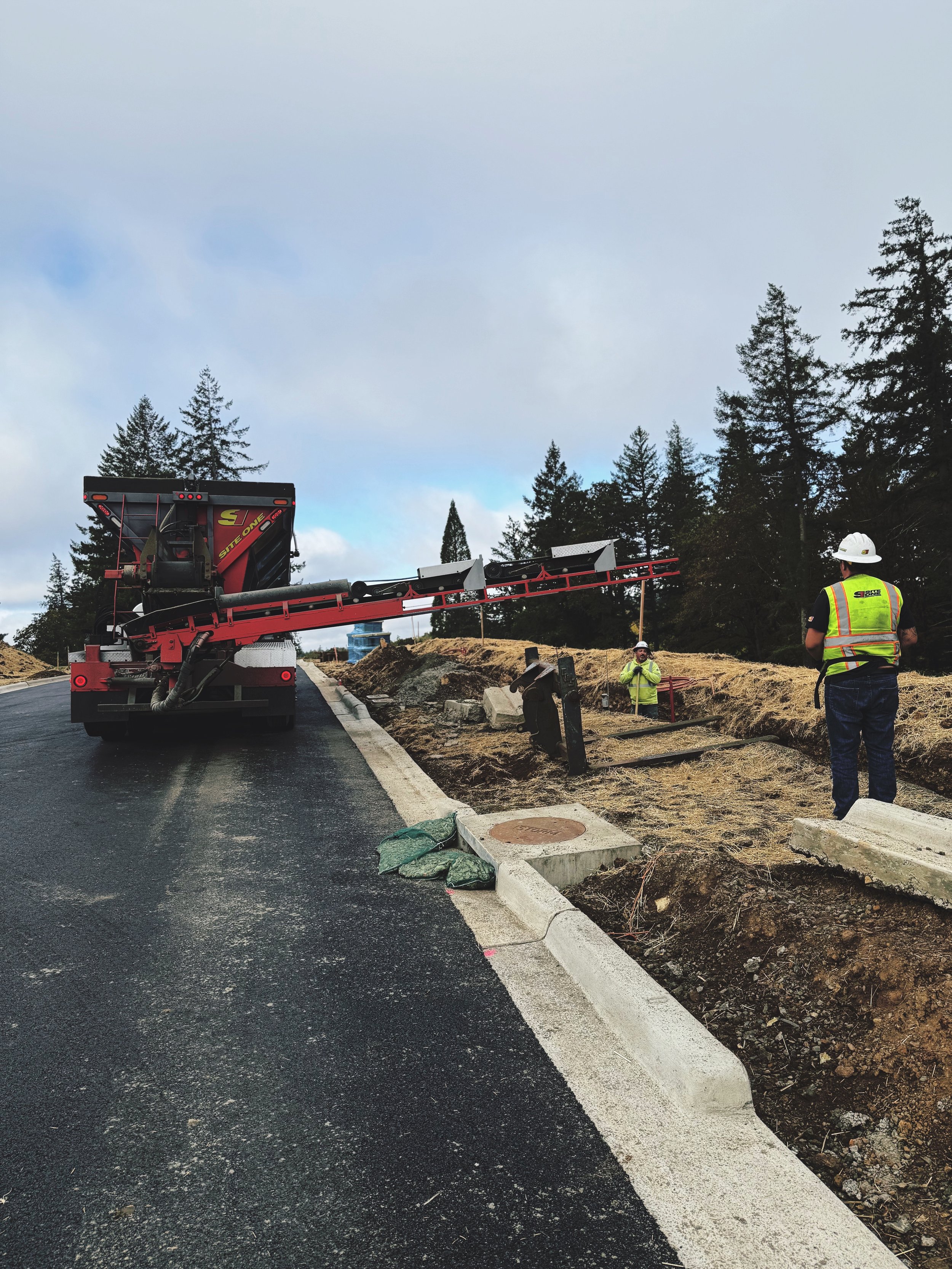
A utility contractor was installing gas lines across a large subdivision in Bethany. The pipe was already in the ground, laid in open trenches that ran along roads, turned corners around curbs, and crossed through the developing neighborhood. Before the trenches could be backfilled, sand needed to be placed over the gas lines at the right depth to protect the pipe — a process called trench shading.
In about 20% of cases, the native earth was too rocky to use as backfill directly over the pipe, so sand was also placed as bedding underneath the line before the pipe went in. Either way, the material needed to land in the trench precisely, at the correct depth, without shifting or damaging the gas line.
The Challenge
Trench shading over gas lines is not a volume job — it's a precision job. In many cases, a crew member is standing in the trench holding the pipe down while material is being placed around it. The sand has to land at the right depth, in the right spot, without disturbing the line or the person working alongside it.
The trenches don't run in a straight line. They follow the road, turn corners, and navigate around curbs, sidewalks, and other infrastructure. A stationary delivery method — dumping sand in a pile and shoveling it into the trench by hand — is slow, labor-intensive, and doesn't scale across a subdivision with hundreds of feet of trench to fill.
How S1 Handles Trench Shading
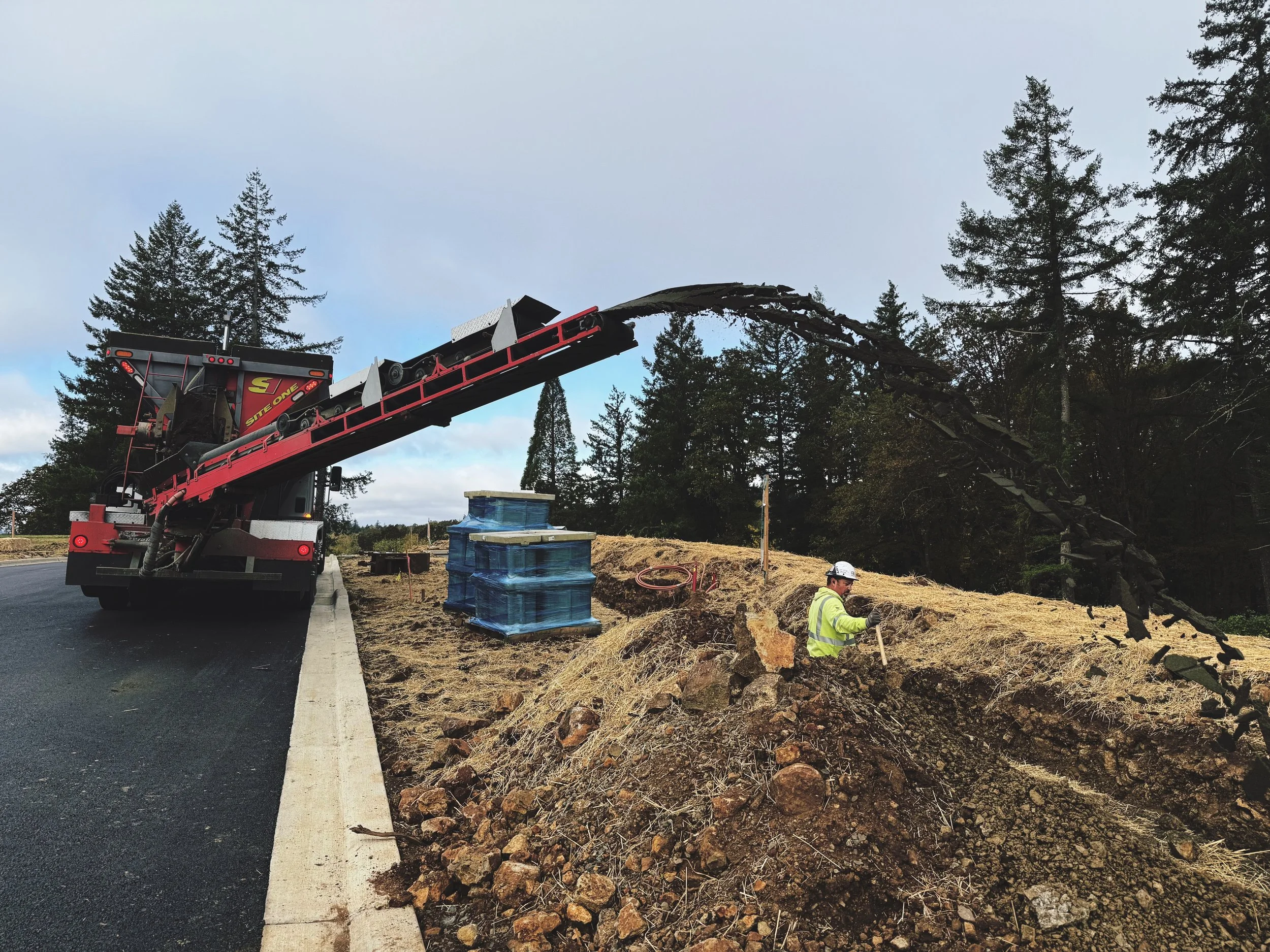
This is one of the things that makes a conveyor truck fundamentally different from a dump truck: we place while we move. The S1 operator drives the truck along the trench line, placing sand continuously into the trench as the truck advances. When the trench turns a corner, the truck turns with it. When the depth needs adjusting, the operator works with the crew on-site in real time to dial it in.
The operator controls the conveyor remotely while coordinating with the person in the trench and the rest of the crew on the ground. It's a coordinated effort — the operator managing flow and direction, the crew managing depth and pipe position, and the truck moving steadily along the line.
On the Bethany job, we ran 2 trucks over 2 days — keeping pace with both the scale of the project and the crew's progress across the subdivision.
We only send our most skilled operators on trench shading work. The margin for error is smaller than on most jobs, and the consequences of getting it wrong — a damaged gas line, an injured crew member — are real. This isn't a job for someone learning the equipment. It's a job for someone who's mastered it.
Why This Works at Scale
Subdivision utility work means hundreds — sometimes thousands — of lineal feet of trench that need to be shaded or bedded. Doing that by hand is a labor marathon. Doing it with an excavator bucket is imprecise and creates unnecessary risk around the pipe.
S1 can run multiple trucks over multiple days without disrupting the project schedule. With a fleet of 30 conveyor trucks, we can scale to match the pace of large utility installations — whether that's 2 trucks for 2 days or more. The customer doesn't have to wait for material, and the crew doesn't have to stop working while the next load shows up.
Why Conveyor Trucks Are Ideal for Trench Work
The ability to place while moving is the key advantage. A dump truck can deliver sand to a job site, but it can't put it in the trench. An excavator can push material into a trench, but not with the precision needed around gas lines. A conveyor truck does both — it delivers and places in a single step, continuously, while moving along the trench line.
For utility contractors running gas, water, or sewer lines across subdivisions, that difference translates directly to time saved, labor reduced, and safer, more precise conditions around the pipe.
If your next job requires precision, experience, and an operator who knows how to work alongside your crew — call S1.
